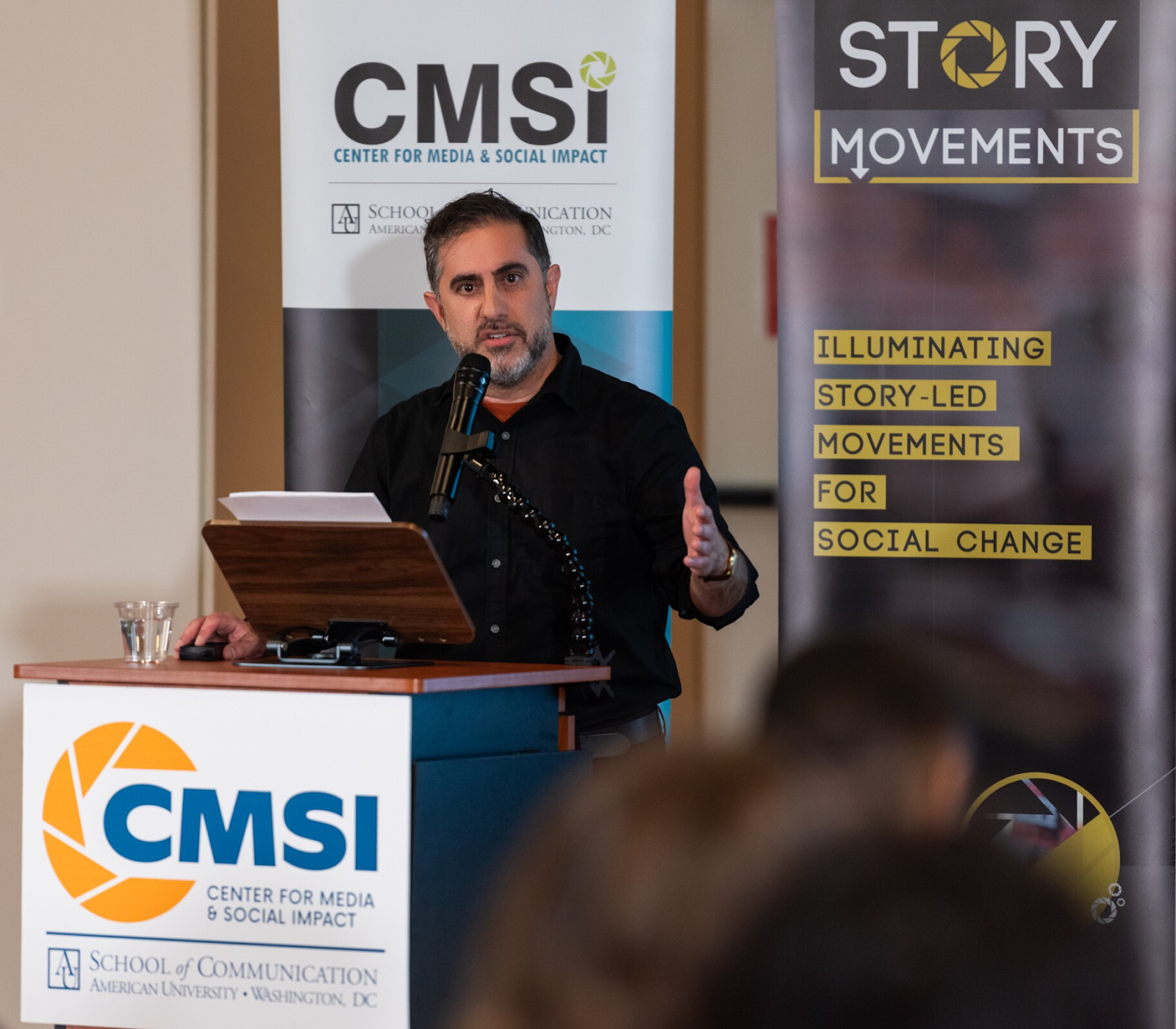
Last month, I delivered closing remarks at the Story Movements conference at the Planet Word Museum in Washington, D.C.
Story Movements is a biennial convening — which the Center for Media & Social Impact at American University hosts — that brings together artists, storytellers, comedians, journalists, funders and media outlets to learn about and celebrate the power of culture and role of narrative in contemporary movements for social justice, across platforms, methods and genres of civic media storytelling.
From documentary film to investigative journalism to participatory storytelling activism to the entertainment industry and beyond, Story Movements examines and captures the current and forward-looking moment in story-led demands for social change.
Below is my speech, edited slightly for clarity and context, and in some instances liberally for posterity.
***
Nostalgia for a Future Foreclosed
I come here as a communicator; a crafter of words and messages; a consumer, creator and critic of media; and an analyst of narrative and power. I do this work in a number of ways, both as part of and also beyond my role as a vice president at Spitfire Strategies.
At Spitfire, we build partnerships and connection through communications and through community. We develop strategies and stories. And we always strive to make meaning out of the chaos.
And this is certainly a time of chaos. It’s a time when building power — people power, community power, labor power, narrative power — for a more just, representative and responsive world and for our human community and common humanity can seem harder than ever.
But being here with you has been inspiring. Storytelling is the common language of human experience, and you all are the storytellers.
Stories are essential to human nature. We, as pattern-seeking animals, are hard-wired for storytelling. Stories allow us to make sense of the world.
It’s why for millennia we’ve looked up to the night sky and used those billions of points of light to tell tales of gods and monsters, heroes and adventures. We seek patterns in everything, creating meaning from chaos, from randomness, from nothingness.
As poet Muriel Rukeyser wrote, “The universe is made of stories, not of atoms.”
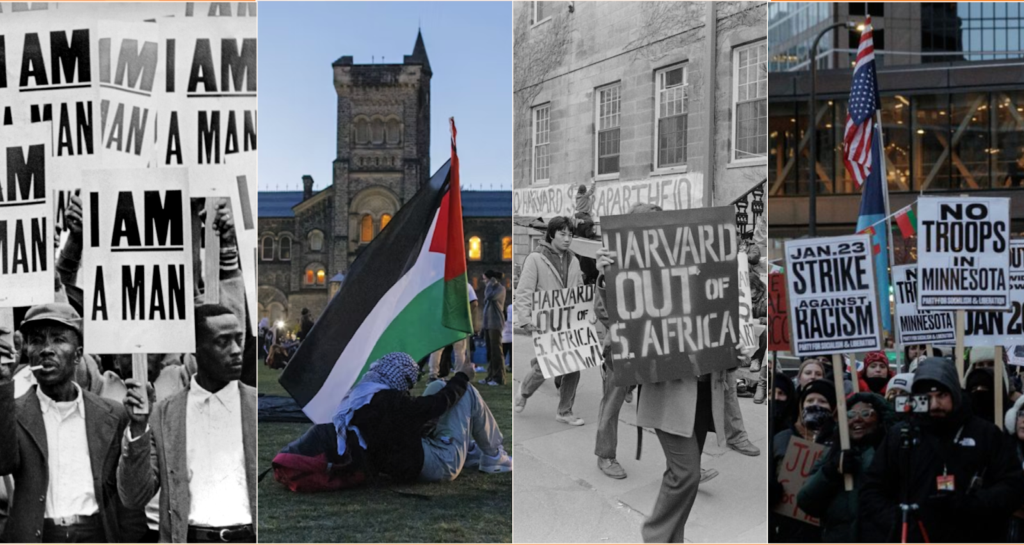
Over the past couple days, we’ve heard about the power of stories — how stories not only illuminate our past and inform our present but how they can motivate action to build a better, more inclusive, more equitable future. We’ve heard from filmmakers and comedians, poets and artists.
On a Canadian television broadcast in early 1961, singer and actor Harry Belafonte said, “The role of the artist,” whether a “poet or a painter or an actor or a playwright,” is to act “as a mirror of the society.”
Yes, this is the work: Reflecting reality, but also refracting it — changing and dispersing points of view into new spectra of understanding and meaning-making.
Solidarity in the face of war crimes, genocide and state violence. Truth and determination against disinformation and disappearance. Building cultural and narrative power that guarantees our humanity regardless of race, class, nationality, gender or any other identity applied to us or claimed by us.
So, what future are we building together? And how do we get there?
Author and former president of Demos, Heather McGhee, has noted, “Everything we believe comes from a story we’ve been told.”
Indeed, the stories we’re told and the narratives they entrench and reinforce: This is how slaughter can be justified as self-defense or regime change as liberation; how you can bomb school children and call it a war; how extraction is called “innovation”; how cancer alleys are a small price to pay for corporate profits or no price at all.
But for every dominant narrative that defines and dictates what and whose stories are allowed and encouraged, there’s another one suppressed, omitted, maligned and marginalized.
So, I want to talk today about how we understand the world around us; why we believe what we believe, that is, those stories we carry; what we’ll accept; and what we’re not allowed to have.
In this work, we often talk about creating the future we want. A magical yet to be, in contrast to a mythologized past that never was and our impossible-to-believe present that shocks and appalls us daily. A better tomorrow that we only need to fight harder for.
But here’s the thing: So many of the problems we seek to solve have been solved already. As political scientist Adam Bonica recently wrote, “Universal healthcare is not some utopian fantasy. It is Tuesday in Toronto. Affordable higher education is not an impossible dream. It is Wednesday in Berlin. Sensible gun regulation is not a violation of natural law. It is Thursday in London. Paid parental leave is not radical. It is Friday in Tallinn, and Monday in Tokyo, and every day in between.”
Yes, our myriad imagined futures are all too often already lived realities that other people enjoy in other places, or even at other times, but are deliberately foreclosed from us.
Our present has been made for us — keeping us dreaming for something else while we just try to survive the choices others have made for us.
As science fiction writer William Gibson has said, “The future’s already here, it’s just not evenly distributed.”
So, how did we get here, and what do we need to distribute the future more fairly?
In essence, how do we build power? How do we take back control?
Our world and how we see it is shaped by so many things, among them language, media, culture, movements.
Language
We’re here today in the Planet Word Museum. As communicators and storytellers, we know that words are indeed wondrous and dangerous things. As Student Nonviolent Coordinating Committee (SNCC) Chairman Kwame Ture (born Stokely Carmichael) told us, “The power to define is the most important power that we have.” Words hold power; they bestow or deny humanity and agency. They define the terms of liberation and oppression.
Here’s an example: In the late 1960s, police department public relations teams in Southern California introduced a new term to keep track of incidents when cops killed people. It spread from Long Beach to Los Angeles.
In early 1979, when 39-year-old Eula Mae Love was shot to death by two LAPD officers on her own front lawn in the Watts neighborhood over a dispute about an unpaid gas bill, the story and the term — “officer involved shooting” — made their way across the country to the paper of record, The New York Times … and from there it went everywhere until we barely noticed it was even there. It’s an exonerative term — one that gets the killer off the hook and removes agency and identification. It obscures and absolves. This is deliberate.
Much in the same way, the oil industry inaugurated a new term — the carbon footprint — in the early 2000s, which firm Ogilvy and Mather created for a marketing campaign for BP.
The term deliberately inverts responsibility for destroying our planet — putting it on us as individuals to do better, recycle more, reduce waste and getting the corporations polluting our world off the hook.
OK, just one more: Public space — the street — used to be for people, pedestrians. But in the early 20th century, automobiles crashed the party and kept crashing into people. The rise in fatalities caused public outrage; cars were dubbed “killing machines”; and regulations limiting the number of cars on the road were starting to emerge. The automobile industry had to do something. So, it campaigned to criminalize walking, and through a massive PR push, reframed pedestrian victims of crashes as “jaywalkers” — “jay” was a derogatory term for country folk, like “bumpkin” or “rube.”
In less than one generation, city streets were transformed from community spaces with kids playing, handcarts and horse carriages, workers and walkers to paved motorways with “sidewalks.” Getting hit by cars — one of the world’s leading causes of death — was the jaywalker’s or the driver’s fault, human error and moral failing. Safety is individualized, not the responsibility of those profiting from sustaining our highly subsidized, car-centric road environment. The system isn’t to blame and can’t be changed; if you get hurt, that’s on you, rube. They took our common ground away, and they blame us when we get hurt because of it.
In so many ways, a fairer, safer, healthier future could just be a return to what once was. This isn’t naive nostalgia for a past that never was; rather, it’s a way of remembering that many of our public goods and much of our common humanity has been commercialized, capitalized and corporatized out from under us.
Media
I think a lot about media and its narrative power, so let me talk about the media a bit.
As storytellers, you know that all the best data can’t beat a good story. This is nothing new, of course. Over 40 years ago, Palestinian scholar and literary critic Edward Said wrote, “Facts do not at all speak for themselves, but require a socially acceptable narrative to absorb, sustain and circulate them.” And those in power largely dictate what’s acceptable or not.
And as Steven Renderos of MediaJustice recently explained, “Those who own the megaphone are shaping the story. Those trying to tell a different story are pushed out. And tech is behind it all. … The tech oligarchs buying up our media institutions aren’t doing it because they love journalism. They’re building infrastructure for AI, surveillance, and data extraction. A compliant media ecosystem is part of the way they advance their agenda.”
U.S. Immigration and Customs Enforcement’s terrorism in American cities and Israel’s genocide in Gaza have all been streamed live in 4K, which is why those in power sought to gain control of TikTok. For them, the problem isn’t the violence — it’s the visibility.
And it’s not just news outlets and social media; it’s production studios and streaming services. The billionaire Ellison family, for instance, doesn’t just own TikTok; they have CBS, MTV, Nickelodeon and Paramount. And they soon might control Warner Bros. and HBO too.
This is why building alternative media ecosystems where marginalized and criminalized Black and brown communities can control their own narratives.
This isn’t some fantasy; it’s happened before.
In 1827, Freedom’s Journal became the first Black-owned and operated newspaper in the United States. Publishers Samuel Cornish and John Russwurm established the paper in New York City, as they put it, “to plead our own cause” and provide an accurate, abolitionist alternative to the racist misrepresentations of African Americans in white newspapers and literature.
And nearly 130 years later, while newspapers introduced readers nationwide to Emmett Till’s murderers as all-American veterans, pictured as younger men smiling in their official Army uniforms, it took Black outlets like The Chicago Defender and Jet magazine to share the truth, in all its horrific detail, about Till’s lynching.
The media’s power to frame our discourse and influence public opinion remains. The press humanized Mike Brown’s killer as a quiet and “low-profile” cop, while his unarmed 18-year-old victim was said to be “no angel.”
Clearly, one look at headlines following the federal secret police terror squads’ murders of Nicole Renee Good and Alex Pretti in Minnesota shows us that our media still has a long way to go.
Culture
Of course, so many things beyond just the media shape our worldview. Cultural theorist Stuart Hall described culture as “a dimension of everything … the bearer of meaning and value … the area where deep feelings are involved,” where “[e]verything both exists and is imagined.” He wrote, “Popular culture is one of the sites where this struggle for and against a culture of the powerful is engaged: it is the stake to be won or lost in that struggle. It is the arena of consent and resistance.”
In fact, we know that things that don’t even seem political or ideological — things that are even just family fun — can often have the greatest effect.
In the early 1900s, as industry expanded, work life changed and people had a little more leisure time, board games gained popularity. In 1903, a time of robber barons and great social inequity, firebrand poet and independent game designer Lizzie Magie created “The Landlord’s Game” to both entertain and teach about the dangers of private real estate interests and how wealth created for the common good allowed communities to thrive. She described the game as “a practical demonstration of the present system of land-grabbing with all its usual outcomes and consequences.”
There were two ways to play — one where you tried to get everything for yourself, leaving your fellow players destitute and resentful, and one where when you all worked together, everybody won.
She applied for a patent for her game on March 23, 1903 — incidentally the exact same day the Wright Brothers applied for their own.
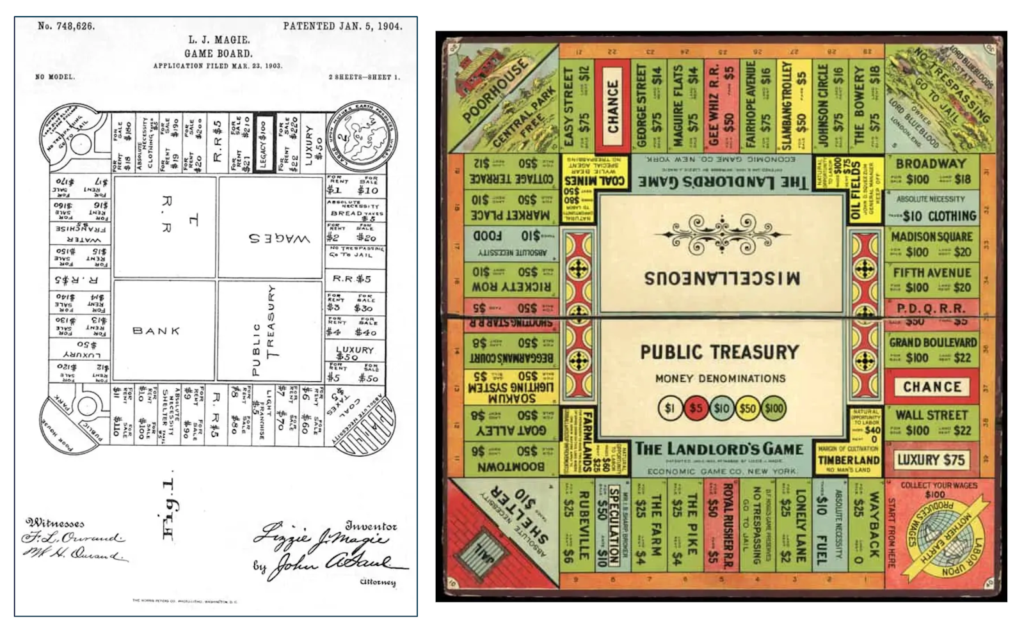
By the 1930s, as the Great Depression raged, Magie’s original game had spread across the country, mostly through word of mouth (it hadn’t been mass produced), and players had adapted the game board. At one point, unemployed heater salesman Charles Darrow played the game at a friend’s house — a version that a community of Quakers in Atlantic City had modified, renaming Magie’s properties and spaces after streets in their own town: Marvin Gardens, Ventnor Avenue, Park Place, Boardwalk.
Darrow took the game and sold it to the struggling Parker Brothers game company, who decided to get rid of the common good rules and produce only the greedy one.
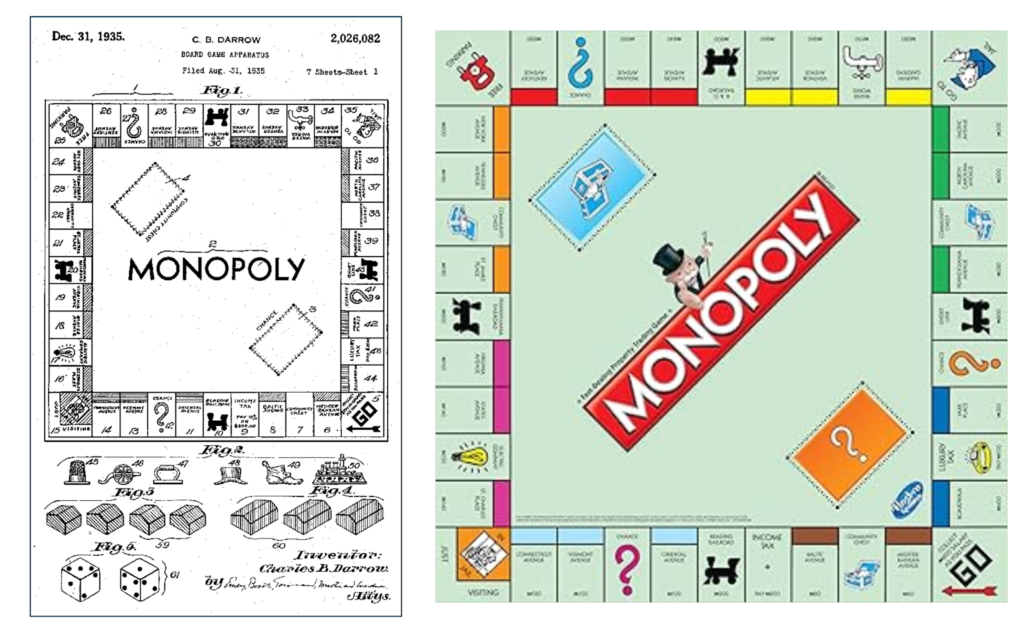
The rest is history. Darrow became a millionaire by claiming Magie’s creativity as his own, and family game night in the United States and across the world has reinforced the dominance of capitalism over community for generations.
Movements
So, what the hell do we do about all this?
In his recent book, “The Message,” Ta-Nehisi Coates writes that “the standards of enslavers, colonizers, and villains simply will not do. We require another standard … we are charged with examining the stories we have been told, and how they undergird the politics we have accepted, and then telling new stories ourselves.”
This is what has brought us all here to Story Movements. It’s why we’re learning and working together, especially now — a time of unspeakable violence and revived fascism.
In the introduction to the new collection, “Read This When Things Fall Apart,” Kelly Hayes writes, “To survive and cultivate meaning amid so much collapse, we have to change everything — and we are going to need each other.”
Indeed, our world is in crisis. But your work is part of the struggle. As historian Robin D.G. Kelley has said, “There are no utopias. We have to keep remaking our vision over and over again and remind us what we’re doing is only struggle … No promise of liberation, only the promise of struggle.”
Put another way, as feminist activist and organizer Grace Lee Boggs said, “We are beginning to understand that the world is always being made fresh and never finished.”
We don’t need to have all the answers, but we can never stop trying to find or remember them. We must continue to make meaning from the chaos, make our majorities powerful enough to take back control, to tell fuller stories about who we are and what we stand for. As we’ve seen in New York with Zohran Mamdani and in Texas with James Talarico, it’s essential to offer a consistent vision of what’s positive and possible, of what we’re fighting for, and not just what we’re up against.
And we have to do more than talk.
As Andre Banks of NewWorld recently wrote, “We need more than just outrage and improvisation. We need organizing lifted up by infrastructure that can turn attention into action.”
Again, this is the work. And it’s not easy, especially in the face of decades, centuries, of narrative infrastructure and power built against us. When the narrative gravity works so hard against us, it can feel impossible to rise together.
But I refuse to leave us there. We must not wallow. After all, as the poet Audre Lorde tells us, “Despair is a tool of our enemies.”
So, I’ll end with this:
Another thing I should tell you about myself is that I love professional wrestling. It’s one of the most powerful storytelling mediums ever created — part theater, part ballet, part gladiatorial combat, part soap opera. The pageantry and spectacle are emotional and entertaining, but wrestling has also always been political — both in the ring and outside of it. Stories told through words and action. Media and entertainment, narrative and fandom — it’s all rolled up in the same small package. And if you don’t know anything about this world of wrestling and think it’s all silly costumes and choreographed fighting, it can certainly surprise you.
I swear I didn’t create this headline with artificial intelligence for the purposes of this presentation.
It’s very real.
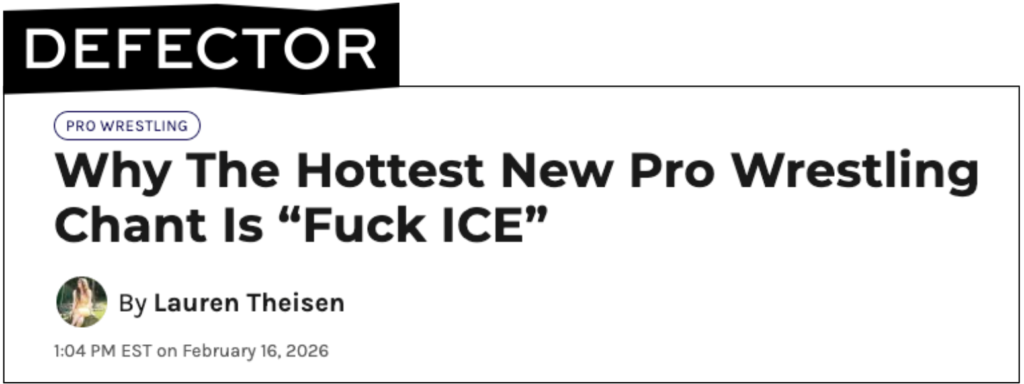
See, there is hope yet!
Your work as storytellers, artists, filmmakers, writers, comedians and communicators helps the world wake up, to see more clearly the systems that bind us and the ones that will set us free.
Collectively, we can bring meaning, purpose, agency, intention and power to all the swirling chaos — and actively organize for a fairer future for all of us.
I’ll leave us with the words of the 13th century Persian poet Rumi:
Out beyond ideas
of wrong-doing and right-doing,
there is a field — I’ll meet you there.
When the soul lies down in that grass,
the world is too full to talk about.
Ideas, language, even the phrase
“each other”
don’t make any sense.
It’s been great to be here with you all, and I can’t wait until we’re all in that field together.